 |
| JSG Group |
The success of pathogenic bacteria is based on their ability to spread and colonize the host organism, but also on their ability to survive under adverse environmental conditions. This requires the production of an appropriate repertoire of virulence factors, as well as factors that enable survival under stress.
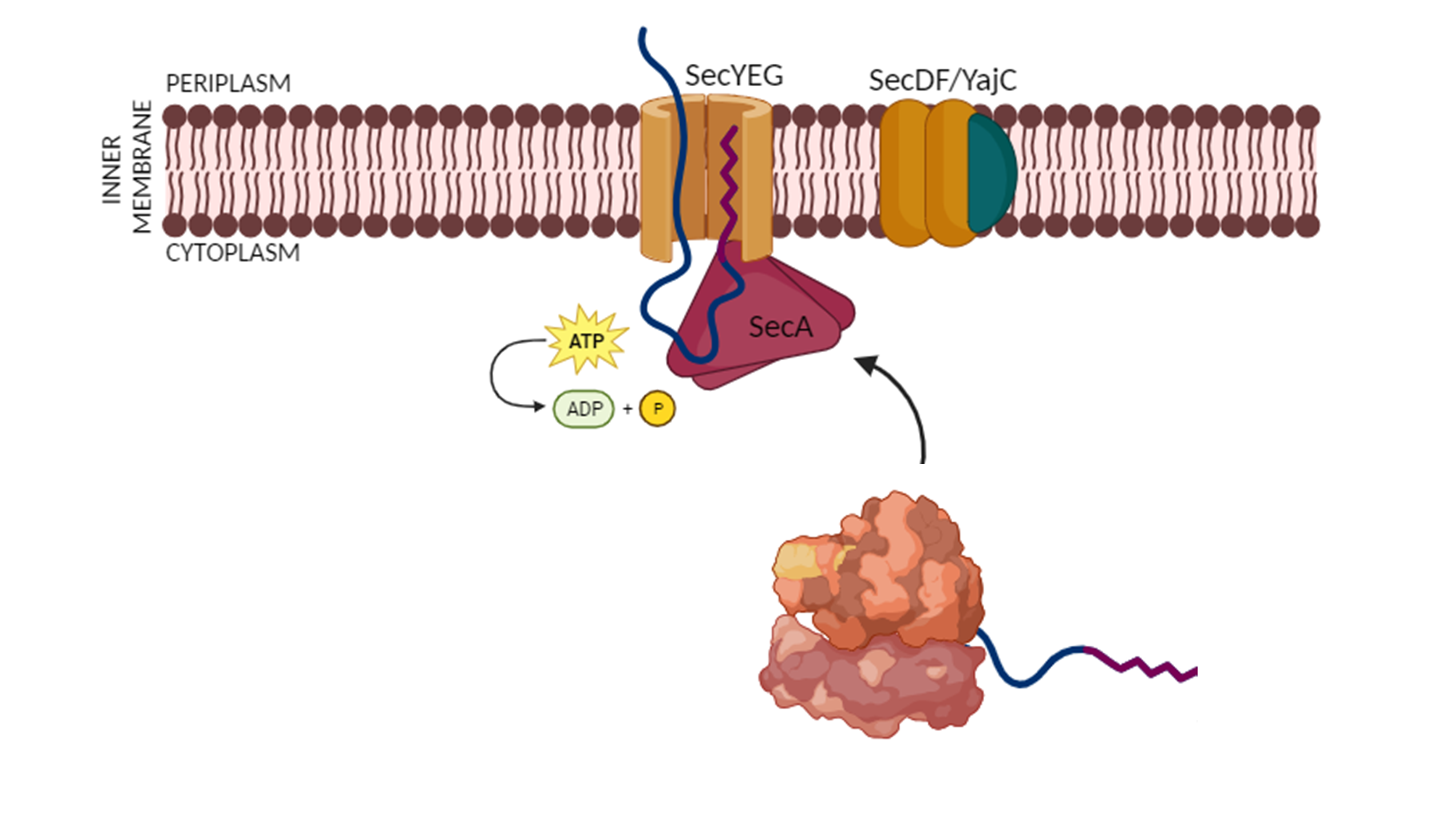
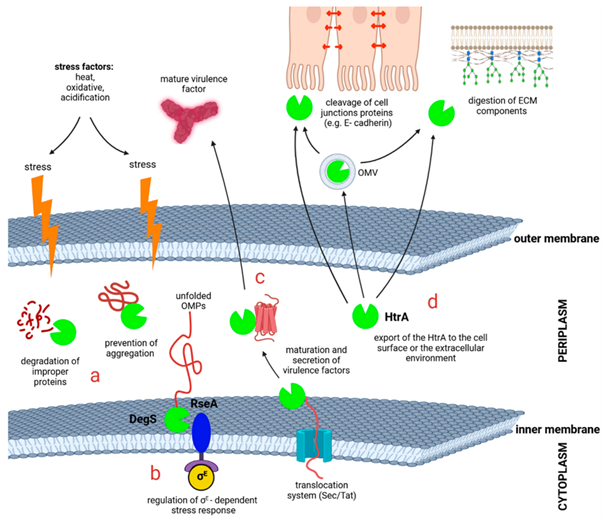
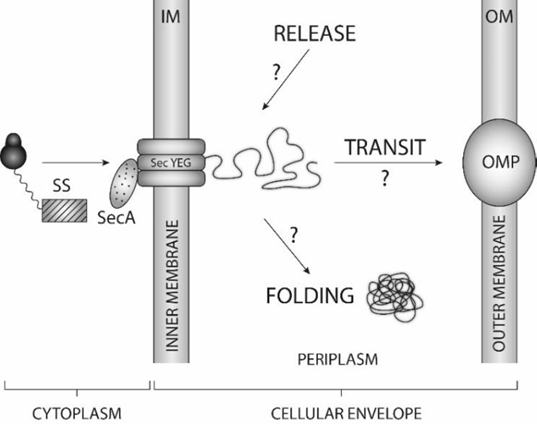
In our research, we focus on the function of a group of proteins collectively referred to as the protein quality control system (PQCS), whose role is to facilitate proper protein folding and counteract the effects of stressors that damage proteins. The periplasmic space of Gram-negative bacteria is particularly vulnerable to stress. On the other hand, many key virulence factors are located in the outer membrane (OM) or transit through the periplasm before being secreted outside the cell. For this reason, a properly functioning extracellular PQCS is essential for the pathogenicity of bacteria.
PQCS comprises proteins with chaperone activity (involved, among other things, in protein folding and the suppression of protein aggregation) and proteolytic activity (responsible for the degradation of irreversibly damaged proteins). Together, they ensure proteostasis within the cell and are required for outer membrane biogenesis and protein export (including many virulence factors).
We are interested in how the absence or alteration of the activity of extracellular PQCS components affects bacterial survival under stressful conditions and their virulence properties. We believe that understanding these aspects of bacterial cell physiology will enable the development of effective antimicrobial strategies.
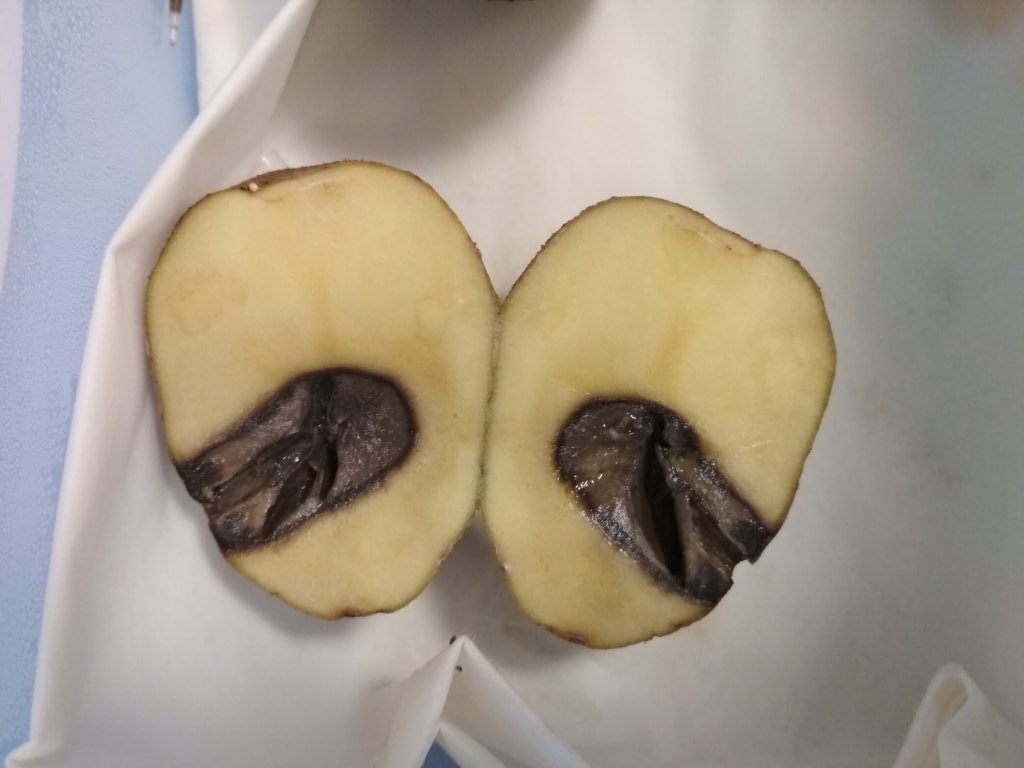
Currently, we are working primarily with research models of Helicobacter pylori (a human pathogen) and Dickeya solani (a plant pathogen).
Our most recent research projects are listed below.