Helicobacter pylori is one the most common human pathogens which is present in approximately 50% human population worldwide. Even though majority of infections are symptomless, they cause chronic inflammation which often leads to numerous disorders such as gastroduodenal ulcers or malignancy. H. pylori infection is a leading factor in gastric carcinoma and MALT lymphoma development. Therefore, it was classified as a Group I Carcinogen by WHO International Agency for Research on Cancer IARC.
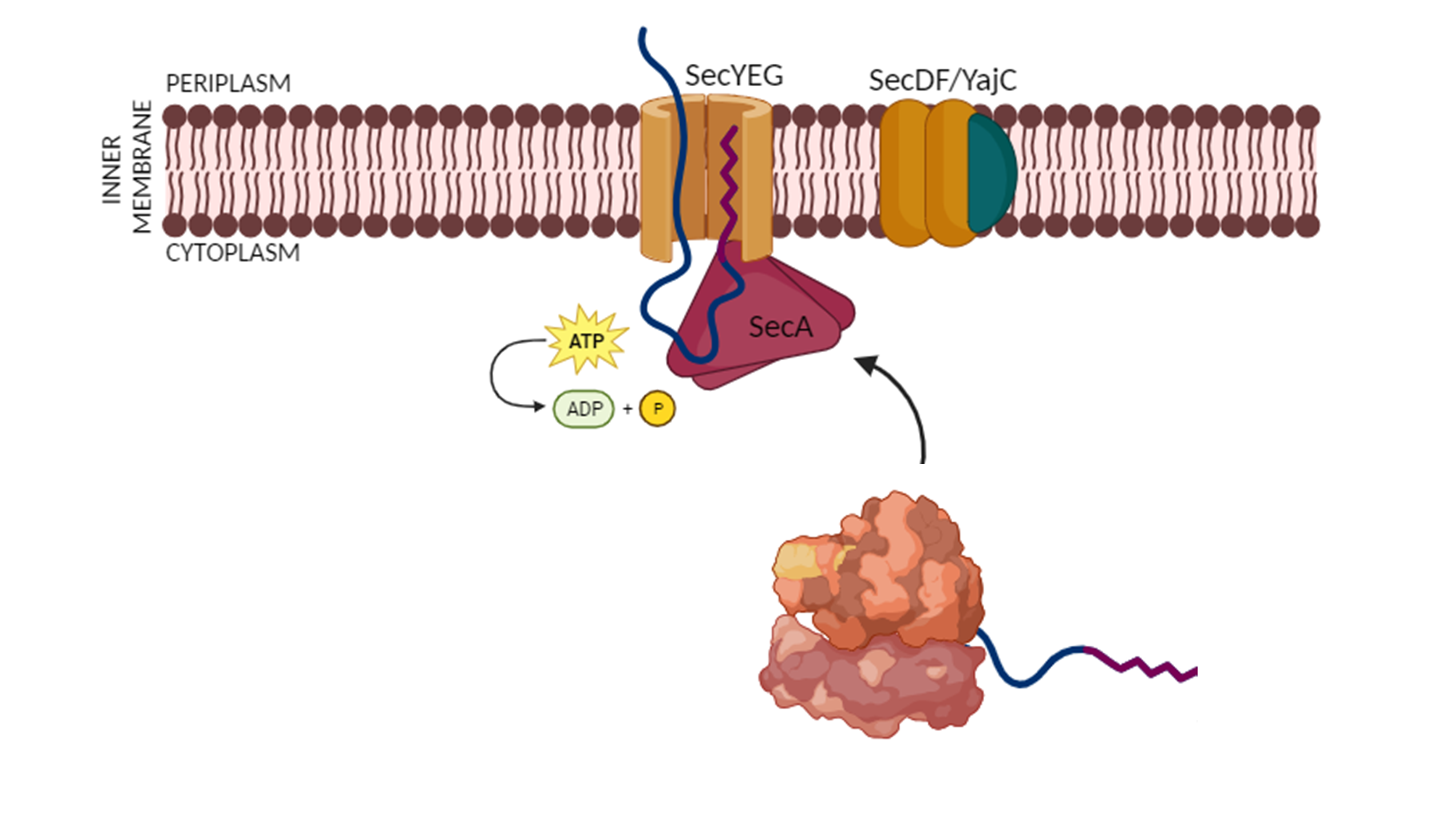
Export of proteins, including virulence factors, periplasmic, and membrane proteins is a key factor of the virulence and homeostasis maintenance of pathogenic bacteria. Cells of the gram-negative bacteria are surrounded by two membranes: inner (cytoplasmic) membrane (IM) an outer membrane (OM) and the space between these two membranes is called the periplasm. Therefore, proteins destined for export in some cases must overcome a double barrier before they reach their target place. Most of envelope proteins (approximately 95%) are translocated across the IM by the SEC translocon. In the model bacterium Escherichia coli, the key elements of this translocon are the IM SecYEG channel, the SecA protein and SecB. During translocation process, SecA plays a dual role: 1) recruits and delivers substrates to SecYEG channel and 2) acts as an ATP-dependent nanomotor which pushes the substrate through the channel. It should be noted that the majority of data regarding functioning of the SEC translocon comes from studies performed on the E. coli model. In H. pylori, most of the homologs of the SEC components have been identified. However, at least one important component, SecB, has not been identified. This suggests that the functioning and regulation of the SEC system in E. coli and H. pylori is different. Since SEC transports proteins in an unfolded form, they must acquire their native conformation when they reach their destination (periplasm, membranes). Unproper or misfolded proteins can appear as a result of spontaneous or induced mutations or exposure to environmental stress. In these cases, the polypeptide chains misfold and induce the folding stress response. Unproperly folded proteins can be repaired by chaperones or become degraded by proteases; alternatively, they can aggregate. The previously obtained results showed that in H. pylori mutations in the htrA gene are in every case accompanied by point mutations in the secA gene and altered expression of secA. These mutations lead to amino acid substitutions in the C-terminal tail (CTT mutations) or truncation of SecA.
We hypothesize that the CTT mutations reduce efficiency of the translocation process and in consequence other PQCS components can handle translocated polypeptides in the absence of HtrA. This result suggests the presence of a relationship between the process of protein transport across the membrane and the processes related to the maintenance of the envelope proteostasis. Thus, we hypothesize that disturbances in the homeostasis of periplasmic and membrane proteins may also cause change of the expression of genes encoding elements of the SEC translocon components.
The aim of this study is to investigate the efficiency of transcription of the selected genes encoding SEC translocon proteins under conditions of disturbed periplasmic and membrane homeostasis in the H pylori cell. Bacteria will be exposed to conditions that may lead to the extracytoplasmic folding stress, including mild OM damage to affect the membrane integrity and exposure to nonphysiological pH, temperature or salt concentration values. These stressful conditions are expected to cause protein denaturation, especially in the bacterial envelope. Therefore, we expect to observe change of SEC system gene expression at least in some cases. The expected outcome of this study is an analysis of the influence of factors disturbing the envelope homeostasis on the level of expression of SEC translocon components. This may lead to identification of a potential mechanism for maintaining extracytoplasmic proteostasis by regulating the efficiency of protein export from the cytoplasm in H. pylori.